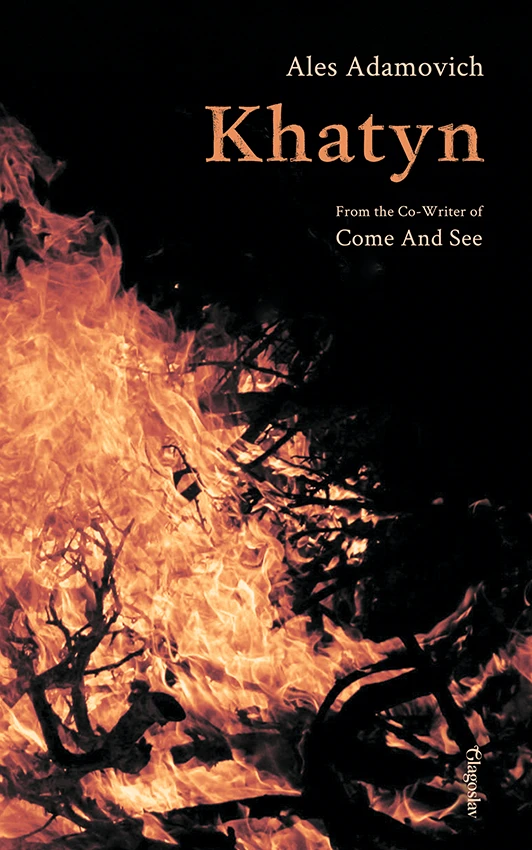
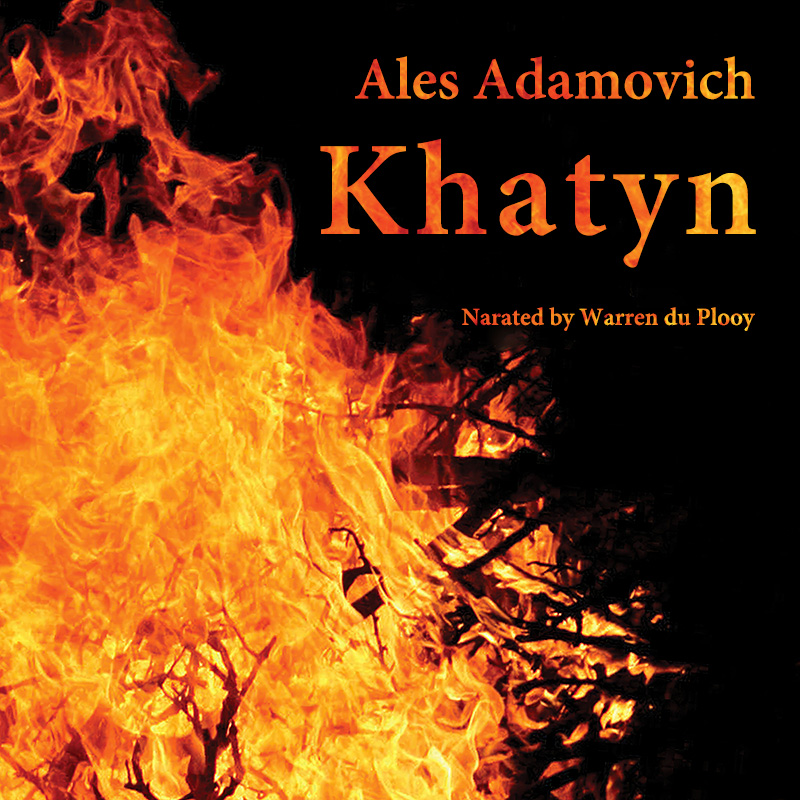
Flyora Gaishun is blind. He is on a bus to the Khatyn memorial with his wife and their son, and the road keeps sliding into memory: the summer he was sixteen and dug a rifle out of a grave to join the partisans, the forest, the hunger, the villages that stood in the morning and were ash by nightfall.
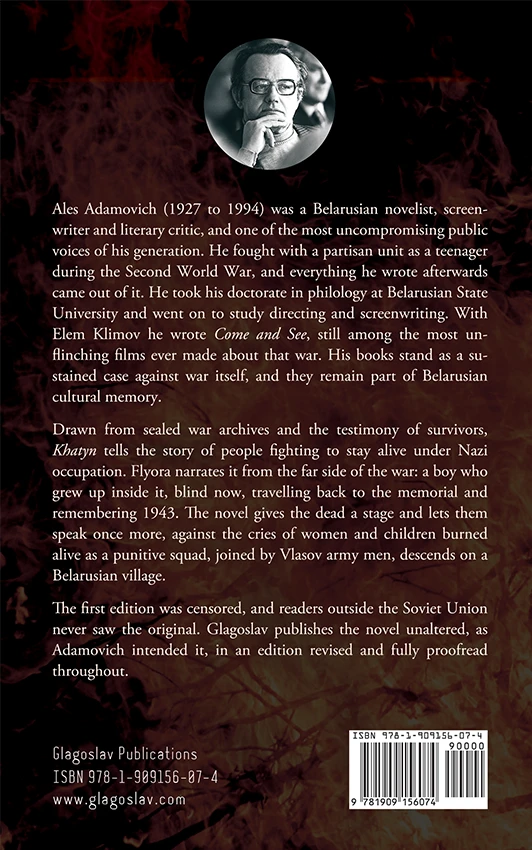
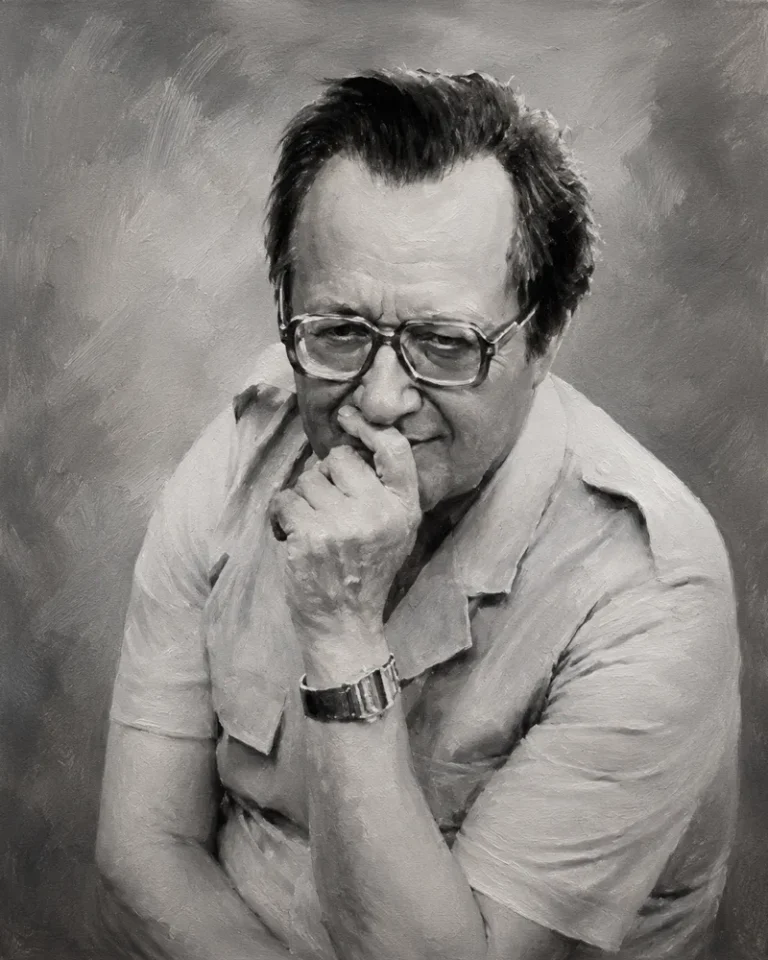
Ales Adamovich was that boy. He fought with a partisan unit in Belarus as a teenager, and he spent the rest of his life writing about what war does to ordinary people. Khatyn, written between 1965 and 1971, is his central work. It later fed the screenplay he wrote with Elem Klimov for Come and See, still one of the most unflinching films ever made about the Second World War, whose young protagonist carries the same name as this novel’s narrator.
More than 9,200 villages were destroyed in Belarus during the war. In over 600 of them almost every inhabitant was killed or burned alive. Adamovich refuses to report this from a safe distance. He writes from inside a boy’s eyes, in prose that stammers, circles and will not settle, and he sets survivor testimony directly against the fiction, so the reader hears the voices of people who walked out of the fire.
The result is a book about memory as much as war: what a country does with its dead, and what it costs a man to go back and look.
This edition has been revised and fully proofread throughout.
Translated by Glenys Kozlov, Frances Longman and Sharon McKee.
Endorsements and Review Quotes
“The quiet art of Khatyn is the illumination, properly fitful and uncertain, of wartime Belarus, of the darkness of the twentieth century. The reader, like the protagonist, like the writer, cannot look away.” Timothy Snyder, Times Literary Supplement
“Still, Khatyn is an important book that deserves a place on the shelves of anyone fascinated by the history of World War II. It’s definitely not for the faint of heart, though. It’s the kind of book that gives you nightmares, and when you wake up and realize you were only dreaming, you cry for those for whom the burning agony was a reality.” Anna Horner, Diary of an Eccentric
“This book is probably not for very sensitive readers but if you think you can deal with all of the bad things in the book, it is most definitely worth the read.” A BOOKISH AFFAIR
“Adamovich is definitely a humanist. His work is not meant solely to depress or enrage us. True, we must never forget the horrors of our past, and we must be on constant guard against forces that would create new horrors (the latter point is emphasized in the novel by the Boky discussions). But in so doing we must live on as humans ourselves.” LOGOMORPHOSES BLOG
“Glagoslav Publications released a special book, a cultural heritage collectible item – Khatyn by Ales Adamovich, a classical Belorussian author who fought as a partisan during the WWII.” EYES IN MAGAZINE
“The book marries the historical events that happened alongwith the author’s own experience as a partisan during the war which results in this moving, haunting story. There are some charming scenes at the beginning, some friendship, some camaraderie, some romance, some humour. But most of the rest of the book is stark, grim, haunting and heartbreaking.” Vishy’s Blog
Readers on Goodreads.com say:
Steve: “Khatyn describes the genocide of Byelorussians in WW II, but as its author intended, it has universal meaning. Although it is fictional, it is very well researched and will be a valuable resource for anyone interested in WW II history.”
Crystal: “This book will make you think about things differently. It was a lot to take in and was emotional for me to read. If you like reading about WW2 and or history you will enjoy this book.”
Amanda: “Wow this book is a must read… It’s a book that will make you look at the world differently. At times it was difficult to read because we don’t want to feel or know others suffering but through this I have a different understanding of war and the feelings and emotions that we in this day and age don’t understand.”
Other publications:
About Ales Adamovich:
“…A decent and honest man, popular with his colleagues at the Cinema Institute in Moscow, for his last six years he was at the centre of Moscow’s political and cultural life.” THE INDEPENDENT
About the movie Come and See based on the story of Khatyn:
“The history is harrowing and the presentation is graphic; you feel it through your body as villagers are packed into a barn to be incinerated.” THE NEW YORK TIMES
“Both exhilarating and exhausting, Come and See is not just a great war film, but a great piece of cinema per se.” STRANGE THINGS ARE HAPPENING