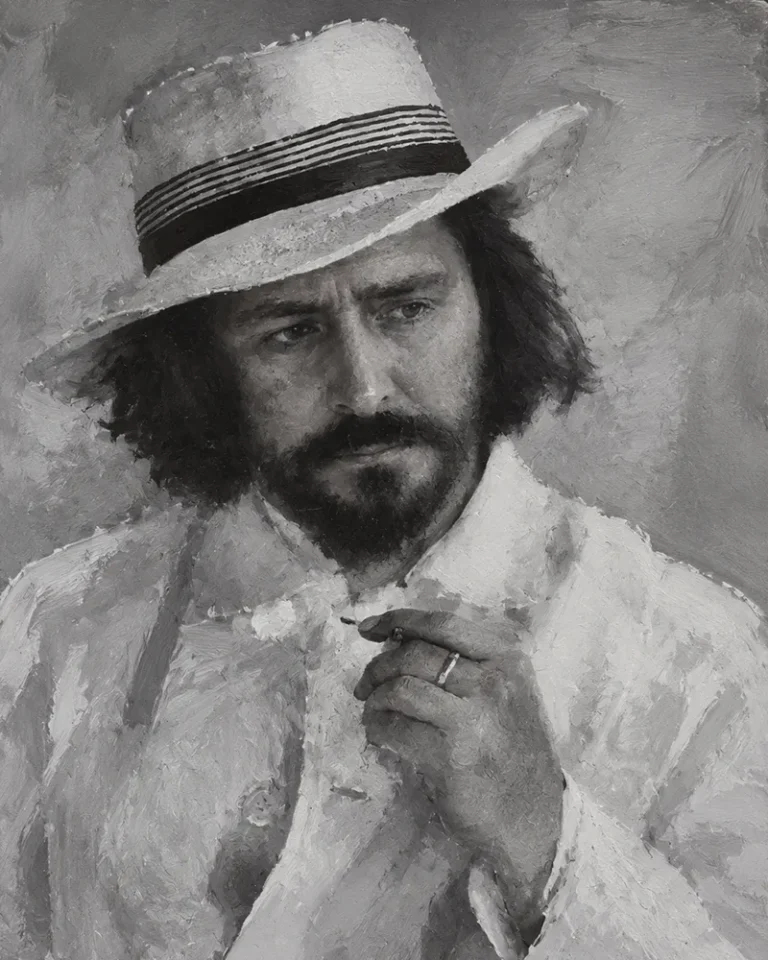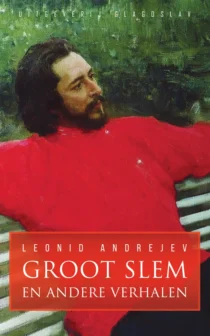
Leonid Andrejev (1871-1919) is een van de belangrijkste vertegenwoordigers van een periode in Russische literatuur die de Zilveren Eeuw genoemd wordt. Tevens is hij grondlegger van het Russische expressionisme. De expressiviteit en het nadrukkelijke symbolisme in de taal van Andrejev vond brede weerklank in de kringen van kunstenaars en intellectuelen in het Rusland van voor de revolutie. Om zijn moeder, die weduwe was, en zijn vijf broers en zusjes te onderhouden, had hij in zijn studententijd een bijbaantje als leraar en maakte hij portretten op bestelling. Na zijn afstuderen combineerde hij een aantal jaren zijn werk als advocaat met dat van rechtbankverslaggever. In 1898 werd Andrejevs verhaal ”Bargamot en Garasjka” gepubliceerd, Maxim Gorki was er lovend over en daarmee nam Andrejevs schrijversloopbaan een aanvang
***
Leonid Andreev (1871-1919) was a famous Russian writer, a representative of the Silver Age in Russian literature, and a founder of Russian Expressionism. Andreev studied law at the Moscow University and the University of St. Petersburg. In 1894 a romantic fiasco led him to attempt suicide, the result of which was heart disease and a religious confession. To maintain his mother and siblings who had moved to Moscow, Andreev resorted to temporary work as a tutor and a portraitist. After successfully passing his final exams at the University, Andreev practiced law for the next few years. The year 1902 marked the beginning of his journalistic activities, following the publication of his first short story “Bargamot and Garask” in 1898 that had drawn literary praise from Maxim Gorky. The expressiveness and symbolism of Andreev’s language evoked a warm response among artists and intellectuals of pre-revolutionary Russia and earned him long-lasting recognition. Andreev actively supported the first Russian revolution; he was jailed for harbouring activists and organizing secret meetings, but soon released. After the reaction of 1907, Andreev renounced his revolutionary views, believing that the revolt of the masses could only lead to suffering. The writer did not accept the 1917 October Revolution. His last works contain pessimistic themes and criticisms of the communist powers of the time.
Leonid Andrejev