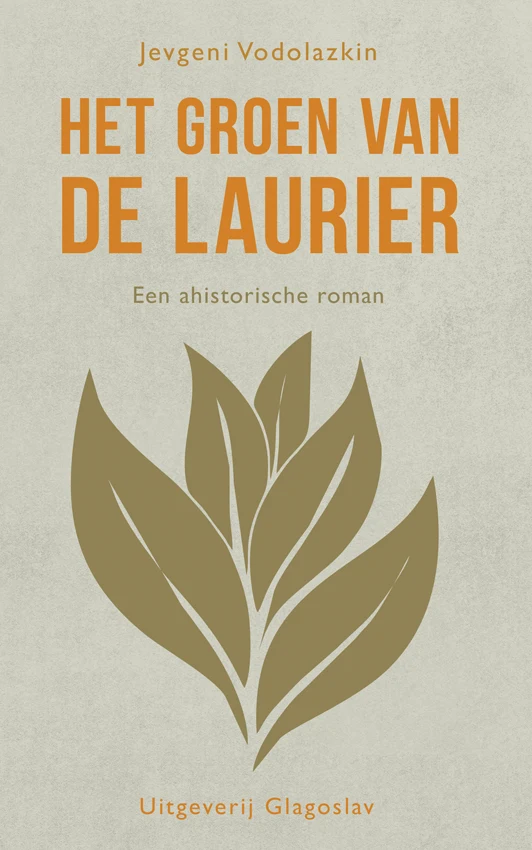
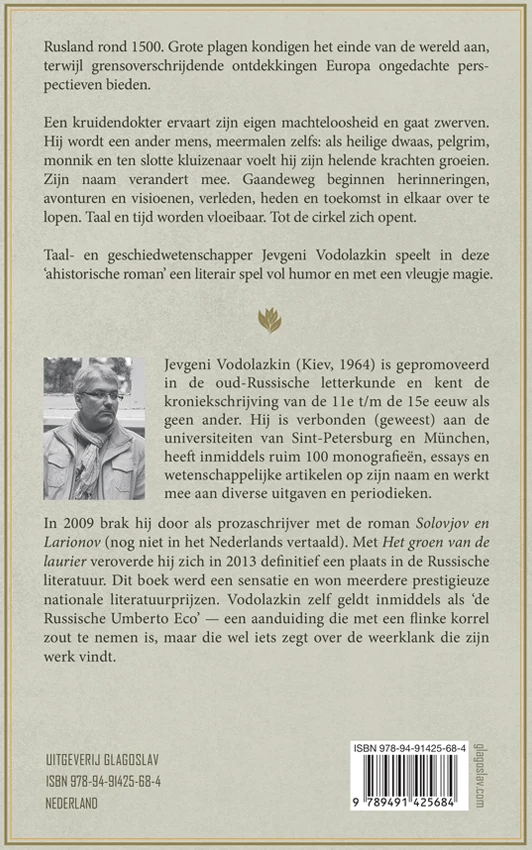
Rusland rond 1500. Grote plagen kondigen het einde van de wereld aan, terwijl grensoverschrijdende ontdekkingen Europa ongedachte perspectieven bieden.
Een kruidendokter ervaart zijn eigen machteloosheid en gaat zwerven. Hij wordt een ander mens, meermalen zelfs: als heilige dwaas, pelgrim, monnik en ten slotte kluizenaar voelt hij zijn helende krachten groeien. Zijn naam verandert mee. Gaandeweg beginnen herinneringen, avonturen en visioenen, verleden, heden en toekomst in elkaar over te lopen. Taal en tijd worden vloeibaar. Tot de cirkel zich opent.
Taal- en geschiedwetenschapper Jevgeni Vodolazkin speelt in deze “ahistorische roman” een literair spel vol humor en met een vleugje magie.
Deze uitgave is mede mogelijk gemaakt door het Russische Instituut voor Literaire Vertalingen.


Endorsements and Review Quotes
“Opmerkelijk is hoe Vodolazkin erin slaagt om, ondanks de zware thema’s, heel vaak een humoristische toets aan het verhaal te geven.”
Nele Ninclaus, Spasibo Magazine
“Caleidoscopische, complexe roman […] De taal is een rijk mengsel van religieuze en middeleeuwse teksten, archaïsche woorden, grappen en teksten uit de Sovjet-bureaucratie. […] Desondanks is de vertaling prima.”
NBD Biblion
Reviews of the novel in English (Laurus) and in the original:
“Laurus is a gripping, weirdly fascinating read — very Russian, perhaps, in its fundamental outlooks and presentation.” M.A. Orthofer, the complete review
“Interweaving an impressive array of images, stories, parables and superstitions, Vodolazkin builds a convincing portrait of 15th-century Europe, a God-fearing place riven by disease and hardship. Yet he also conveys a very contemporary sense of the contingency of identity and of the malleability of time. Little wonder that he has been compared to Umberto Eco, whose The Name of the Rose (1980) cleverly melded postmodern sensibilities with a medieval setting.” Lucy Popescu, The Financial Times
“In Laurus, Vodolazkin depicted a path that one could choose to follow or decide not to. The moral questions aside, the author tried to make it an exciting read.” Grigory Ryzhakov
“One of the most wonderfully jarring aspects of Laurus is the language Vodolazkin uses. I feel almost as if I should write “languages” since Vodolazkin mixes archaisms with contemporary language – dropping in thoroughly modern slang and bits of anachronistic historical and geographical information – to strangely good effect.” Lisa Hayden, Lizok’s Bookshelf
“A Russian philologist has written a book that is a masterpiece by any standards. It has already been published in twenty languages, attracting international attention. First published in Russian in 2013, Eugene Vodolazkin’s Laurus became an instant national success winning several of the most prestigious Russian literary awards, among them the National Big Book Award and Yasnaya Polyana Book Award.” Annie Martirosyan, The Huffington Post UK