Ukrainian Poetry in English Translation
Ukrainian poetry in English translation is available here as complete, properly edited books rather than scattered extracts. The list runs from the eighteenth century to poems written during the current war, and every volume names its translator. A newcomer should begin with the complete Kobzar of Taras Shevchenko, translated by Peter Fedynsky, then move outward in either direction: back to Hryhory Skovoroda, or forward into the twentieth century and the poets writing now.
Glagoslav publishes literature from the Slavic world and beyond, and Ukrainian poetry has been a central part of that programme for more than a decade. Most titles are offered in hardback, paperback and ebook, so a reader can test a poet cheaply before committing to a shelf edition.
Where should a reader start?
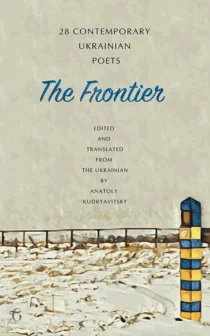
Start with Shevchenko, because everything else in Ukrainian poetry answers him in some way. If a full collected volume feels heavy as a first purchase, begin instead with The Frontier: 28 Contemporary Ukrainian Poets, edited and translated by Anatoly Kudryavitsky, which puts twenty-eight living voices side by side in a bilingual anthology and lets a reader find out which of them they want to follow further.
The list is not arranged as a survey course, and it does not need to be read in order. Each volume stands on its own, with an editorial apparatus that explains where the poet sits and what the translator was trying to do.
After that the path is a matter of temperament. Readers drawn to philosophy and the religious lyric will want Skovoroda and Bohdan Ihor Antonych. Readers drawn to history and political conscience will want Shevchenko and Vasyl Stus. Readers who want to know what Ukrainian poetry sounds like at this moment should read the anthology alongside Alexander Korotko and Natalka Bilotserkivets. Ebook editions across the list are priced at under ten euros, which makes that kind of browsing affordable.
Shevchenko and the Kobzar
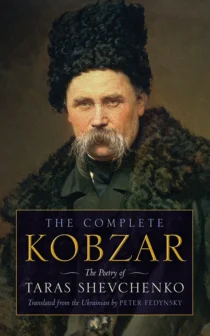
Taras Shevchenko (1814 to 1861) is the poet on whom Ukrainian literary language rests, and Kobzar is the book that carries his work. The Glagoslav edition, translated by Peter Fedynsky and edited by Svitlana Bednazh, was the first complete English rendering of the collection, and it reproduces Shevchenko’s own artwork alongside the poems. Prices run from 9.50 euros for the ebook to 29.99 euros in hardback.
The poems move between ballads of village and Cossack life, psalms written in exile, and a steady insistence on liberty and fairness. Shevchenko was a painter and engraver as well as a poet, and the two practices are hard to separate; that double life is the subject of our article on Shevchenko as poet and painter. For readers buying a gift or a keepsake, the leather-bound Kobzar gift edition, at 69.50 euros, carries full-colour reproductions of his paintings, etchings and drawings.
The eighteenth century: Skovoroda
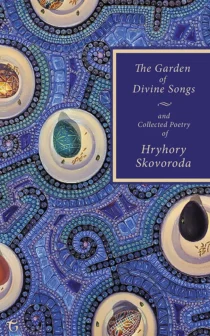
Hryhory Skovoroda is the earliest poet on the list and the strangest. A wandering philosopher who refused settled posts, he wrote verse that reads as spiritual argument set to song. The Garden of Divine Songs and Collected Poetry of Hryhory Skovoroda, translated by Michael M. Naydan and edited by Olha Tytarenko, gathers thirty poems written between the 1750s and 1785.
What makes the volume useful is its completeness: it presents Skovoroda’s poetic work as a whole rather than as an appendix to his philosophy. The strophic structures are unusually varied, and Naydan’s versions keep that variety audible in English. At 19.10 euros in paperback and 9.50 euros as an ebook, it is an inexpensive way into a writer usually met only in summary.
The twentieth century: Tychyna, Rylsky, Antonych
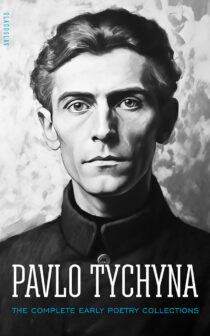
Three poets carry the early twentieth century on this list, and all three are translated by Michael M. Naydan. Pavlo Tychyna: The Complete Early Poetry Collections covers 1918 to 1924, the years of revolution and civil war, and includes an introduction by Viktor Neborak. Tychyna’s early work is the great experiment of Ukrainian modernism, sound-driven and formally restless.
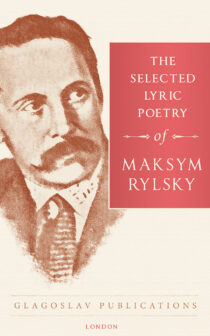
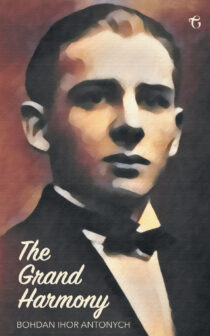
The Selected Lyric Poetry of Maksym Rylsky takes the opposite temperament. Rylsky belonged to the Neoclassicists, and the selection draws on virtually all his early collections as well as later work, including the long poem Thirst written during the Second World War. The Grand Harmony by Bohdan Ihor Antonych, written in 1932 and 1933 and published only in 1967, is a sequence of religious poems tracing a personal spiritual reckoning. Read together, the three books show a generation pulled between formal order, experiment and faith.
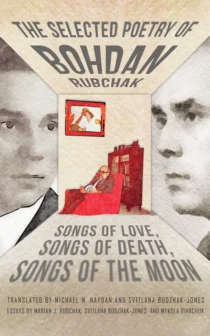
The émigré strand belongs to The Selected Poetry of Bohdan Rubchak, drawn from all six of his published volumes and supported by biographical essays and critical commentary. Rubchak was part of the New York Group, and the book shows how Ukrainian modernism continued abroad when it could not continue at home.
Poetry under repression: Stus
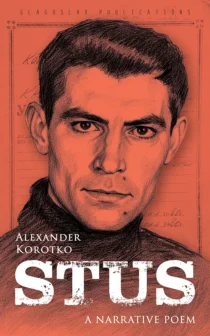
Vasyl Stus wrote much of his work in confinement and died in a labour camp. He is present here in two ways: through our article on Stus and the poetry of resistance, and through Stus: A Narrative Poem by Alexander Korotko, a quadrilingual volume carrying the original alongside Ukrainian, English, German and Polish, translated by Olha Ilchuk, Michael Pursglove, Alois Woldan and Anna Bednarczyk.
Stus matters beyond his biography. The pressure of the circumstances shows in the writing itself, in a language compressed and turned inward, and readers coming to him for the political story usually stay for the syntax.
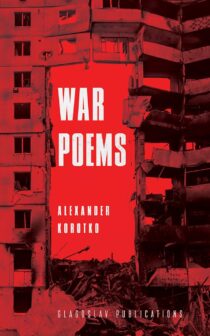
Korotko’s other volume on the list, War Poems, holds eighty-eight poems written in roughly the hundred days after the invasion of 24 February 2022, translated into English by Andrew Sheppard and into Ukrainian by Olha Ilchuk. It is a trilingual book, and the immediacy of its composition is part of what it records.
Contemporary Ukrainian poets
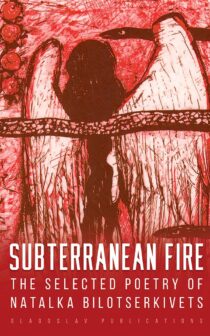
Contemporary work is the fastest-growing part of the list. Alongside The Frontier, which includes Serhiy Zhadan and Vasyl Holoborodko among its twenty-eight poets, there is Subterranean Fire: The Selected Poetry of Natalka Bilotserkivets, gathered from across her career and translated by a group of nine hands including James Brasfield, Olena Jennings, Dzvinia Orlowsky, Virlana Tkacz and Wanda Phipps.
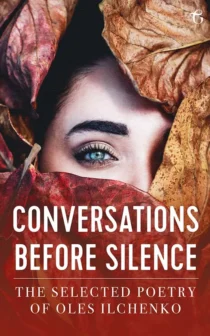
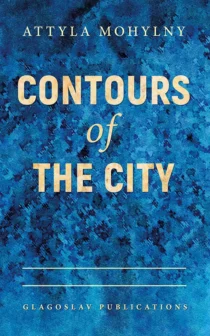
Two further volumes show the free-verse line. Conversations before Silence by Oles Ilchenko is fragmentary and associative, often dispensing with punctuation and capitals. Contours of the City by Attyla Mohylny, first published in 1991 as Ukraine moved to independence, is a deliberate turn away from the rhymed and metred tradition, translated by Naydan with Tkacz and Phipps.
Carols and the folk tradition
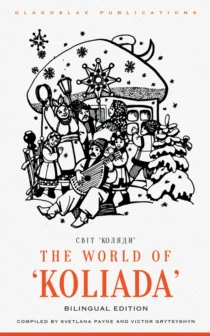
Ukrainian poetry does not begin on the page. The oldest layer is sung, and The World of Koliada, compiled, edited and translated by Svetlana Payne, is the first English translation of a body of Ukrainian Christmas songs and chants. The volume is bilingual and includes sheet music.
Song and verse have never fully separated in Ukrainian tradition, and the printed poets on this list drew on that inheritance directly. Shevchenko took the title of his book from the kobzar, the travelling singer.
It also carries introductions by Anastasiia Mykhailenko, illustrations by Pavlo Krysachenko and musical arrangements by Victor Grytsyshyn, which makes it usable by choirs and families as well as readers. For anyone trying to hear where the rhythms of Shevchenko and Tychyna come from, the carols are the place to listen.
Every title in one place
All the Ukrainian poetry titles described above, in hardback, paperback and ebook, are listed together below.