
Ivan Franko – The Renaissance Mind of Ukrainian Literature and His Pursuit of Science & Social Justice
Introduction: A Colossus of Ukrainian Thought
Ivan Franko (1856–1916) is one of the central figures of Ukrainian culture, a Renaissance mind whose learning and stubborn energy reshaped the intellectual life of his nation. He was more than a poet, a novelist or a dramatist. He was also an ethnographer recording old traditions, an economist analysing the structures of society, a translator opening windows onto writing from abroad, and an untiring political activist. His pen, fluent in over a dozen languages, moved across genres and produced some six thousand titles, from fairy tales for children to sociological monographs that challenged the order of the day. Behind that output lay a steady commitment to science, secular education and social justice.
Franko’s gift was his ability to hold different things together: he connected the oral epics of Galician folklore with Darwinian biology, classical poetics with Marxist analysis, and the village life of his native Galicia with the currents of European modernity. This article looks at the range of Ivan Franko’s work, setting his writings where literature, empirical inquiry and the struggle for national and human rights meet. By tracing his life, his major works and his later influence, it shows why Franko remains a touchstone for Ukraine’s cultural identity and its progressive thought.
Early Life & Education: Forging a Mind in Galicia
Franko’s wide-ranging mind was formed in Nahuievychi, a Hutsul village in Austrian-ruled Galicia. From his earliest days he absorbed local culture, the oral epics and the Carpathian folklore that would later run through his work. The early death of his blacksmith father left the family struggling, yet the boy’s evident brilliance earned him scholarships, opening a path through the Lviv Gymnasium to the University of Lviv. There his curiosity ran to Classical philology, Slavic linguistics and the natural sciences, which were then new to the university, and the mixture laid a broad intellectual foundation.
It was an arrest in 1877, a consequence of his growing socialist activism, that changed the direction of his life. Confined within prison walls, Franko read Darwin, Spencer and Marx for the first time. That period of enforced reflection joined his empirical understanding of the world to his appetite for social reform, and the combination shaped everything he did in the years that followed.
Literary Career: A Voice for a Nation
Franko entered literature with his 1876 poetry collection, Ballads and Tales, a work that did not merely echo Ukrainian Romanticism but renewed it, adding stark realist detail and psychological depth. He refused to stay within a single genre. In Stolen Happiness (1893) he wrote a play that dissected the workings of patriarchy and the lingering effects of serfdom, and in doing so gave Ukrainian drama its modern shape. The play lays bare the private struggles of people caught in the machinery of social expectation and injustice.
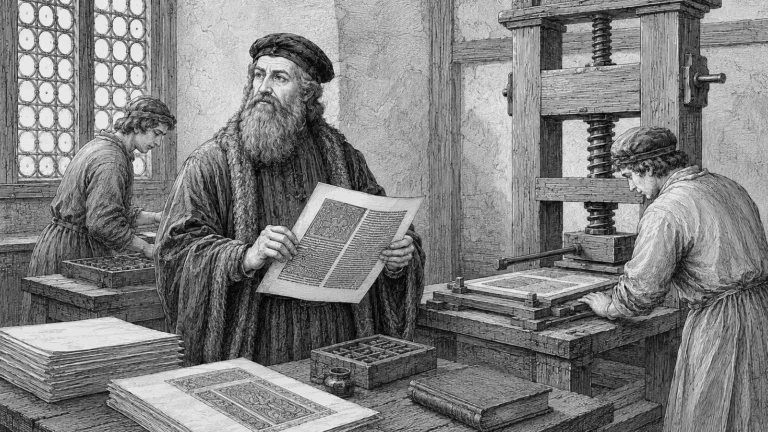
His work extended well beyond his own writing. As editor of Zoria (The Star) and co-founder of the Literary-Scientific Herald, Franko built a platform for new Ukrainian voices while introducing his compatriots to the major European writers, among them Goethe and Ibsen. Through those journals he opened Ukrainian literature to the wider world and gave it a place within a shared European culture.
Explorations in Science & Philosophy: The Empirical Poet
For Franko, literature was not separate from empirical inquiry but an extension of it, a laboratory for understanding the human condition. His essay “On the Scientific Study of Literature” argued for a comparative, data-driven approach decades before such methods became common in literary theory. Struck by evolutionary theory, he set out to share what he had read. He wrote popular science articles that explained geology and biology in plain terms for peasant readers, so that they could weigh such questions for themselves. His translation of Büchner’s Force and Matter into Ukrainian came from the same wish to put knowledge within reach.
In ethnography, Franko catalogued the rituals and customs of the Hutsul people, his childhood community. He had an unusual ability to look past the tradition itself and to link mythic motifs to their social and biological functions, a method that anticipated later work in cultural anthropology and shows how far he carried his habit of joining one field to another.
Major Works & Lasting Themes
Franko’s bibliography is vast, and a number of the works in it are still read closely today. Among the best known are:
Zahar Berkut (1883)
This historical novel, set in the 13th-century Carpathian Mountains, is more than an adventure. It celebrates communal democracy and resilience. Its account of a highland community defending itself against the Mongol invasion became an allegory for national self-determination and the strength of a community under attack, and it still reads that way.
Boa Constrictor (1884)
Considered one of Eastern Europe’s earliest psychological thrillers, this novella portrays financial greed as a predatory serpent, slowly crushing its victims. It is a chilling account of how unchecked avarice corrupts a person, and it melds stark realism with proto-Freudian insight into the darker parts of the psyche.
Prison Poetry (1878–1895)
Written during his imprisonments, Franko’s cycles of prison poetry are personal and yet speak beyond his own case. These verses, among them “Hymn to Labor,” fuse pagan imagery, the cadence of biblical scripture and an evolutionary optimism. They present creative and purposeful work not simply as a means of survival but as humanity’s path to liberation and self-realisation.
Literary Style & Innovation: A Master of Form and Language
Franko’s literary toolkit was as varied as his intellectual interests, and several habits stand out:
- Multigenre Mastery: He moved with ease between the heights of epic poetry, the intimacy of lyric verse, the confrontational force of drama, the wit of satire and the immediacy of reportage.
- Language Fusion: His Ukrainian set the solemn dignity of high-church Slavonic diction against village idiom, producing a polyphonic effect with a wide emotional range.
- Scientific Metaphor: Drawing on his reading in the natural sciences, he often took metaphors from geology, botany and even astrophysics to build symbolic frameworks for his philosophical and social ideas.
- Cinematic Realism: His narrative technique, with its rapid scene cuts and interior monologues, anticipated the innovations of modernist literature and gives the reader a psychologically close view.
Influence & Legacy: A Guide for Generations
Ivan Franko’s influence spread widely and shaped the generations that followed. He personally mentored writers such as Lesya Ukrainka and Mykhailo Kotsiubynsky, encouraging in them the next wave of Ukrainian talent and a spirit of intellectual courage. His scholarly work laid the foundations for comparative Slavic studies, establishing its methods and opening new lines of inquiry. Western scholars have often called him “Ukraine’s Goethe,” recognising the breadth and depth of his contribution to world literature and thought.
Modern scientists acknowledge his part in popularising evolutionary ethics and scientific literacy among general readers. Lviv National University bears his name, a living tribute to his academic legacy. Monuments stand in his honour from Kyiv to Winnipeg, and his phrase “the world is built on hope and labour” still circulates in Ukraine’s civil society, in times of struggle and of hope alike.
Conclusion: The Lasting Spirit of Franko
Ivan Franko’s life and work show what an integrated intellectual looks like: art, science and social conscience were inseparable in him. He set a template for the engaged life of the mind, and argued by example that intellectual work finds its purpose in service to other people. His writing is a reminder that literature can interrogate the natural world with the same rigour it applies to indicting injustice, and that beauty can be a weapon in the fight for truth.
Franko teaches that the quest for truth is inseparable from the defence of human dignity. He remains not only a historical figure but a guide, a “Moses” for his people, as he was often called, for those who believe in the power of knowledge, compassion and perseverance to make a more just world.
Activism & Social Justice: The People’s Advocate
Franko’s pursuit of knowledge was bound up with his fight for human dignity and social equity. A co-founder of the Ukrainian Radical Party in 1890, he became a tireless advocate for systemic change. He campaigned for universal suffrage, land reform and workers’ rights, and took those arguments to the floor of the Habsburg parliament. His journalism exposed the conditions of sweatshop labour and the exploitation practised by clerical and state authorities, and gave a hearing to people who had none.
Pamphlets such as What Is Progress? put egalitarian economic theory into language ordinary readers could follow. While he remained critical of dogmatic Marxism, Franko framed the class struggle not as an economic inevitability but as a moral obligation rooted in both Christian ethics and humanist science. His activism cost him further arrests and persecution, and he went on defending the oppressed regardless.