Rafał Wojasiński: where to start with the writer of Poland’s forgotten people
Rafał Wojasiński is a Polish novelist and playwright who writes about the people most of us pass without a second look: the old woman in a flat no one visits, the drinker outside the village shop, the man in the garret who has outlived everyone he knew. If you are new to him, start with The Forgotten, his new book, published in English this autumn. Then go back to Olanda, the novel that won him the Marek Nowakowski Literary Award, and to Tefil, the portrait of one unforgettable and not entirely pleasant man.
All three are on our list, all three were translated by Charles S. Kraszewski, and between them they show what makes Wojasiński worth reading: the Polish provinces seen from the inside, and a voice that finds tenderness in places where most writers would only find decline.
Who is Rafał Wojasiński?
Wojasiński was born in 1974. He writes fiction and drama, and he has won two of Poland’s literary prizes: the Józef Mackiewicz Literary Award and the Marek Nowakowski Literary Award, which he received in 2019 for Olanda. His books in Polish include Złodziej ryb (The Fish Thief, 2004), Stara (The Old Woman, 2011) and Olanda (2018), and his plays include Długie życie (A Long Life), Dziad Kalina (Old Man Kalina) and Siostry (Sisters), which was nominated for the Gdynia Drama Award. Tefil was nominated for the Award of the Capital City of Warsaw in 2022.
Much of his work has been broadcast as radio drama, and Stara was adapted for the Polish Radio Theatre by Waldemar Modestowicz. You can hear it in the prose. Reviewing Tefil in the journal Twórczość, Tymoteusz Milas called it “literature rhythmic in its language, resonant, made to be listened to”.
The writer Marek Nowakowski, after whom one of those prizes is named, called him “a wild writer”, one in whose stories “unexpectedly, reality passes into a higher sphere”. The jury that gave him the Nowakowski award praised the consistency with which he has portrayed, over many years, “the poor people of our times, the wronged and the humiliated”. That is a fair summary of all three books below.
The Forgotten: two women no one comes to see
The Forgotten brings together two narratives, both told by women living beyond the attention of others.
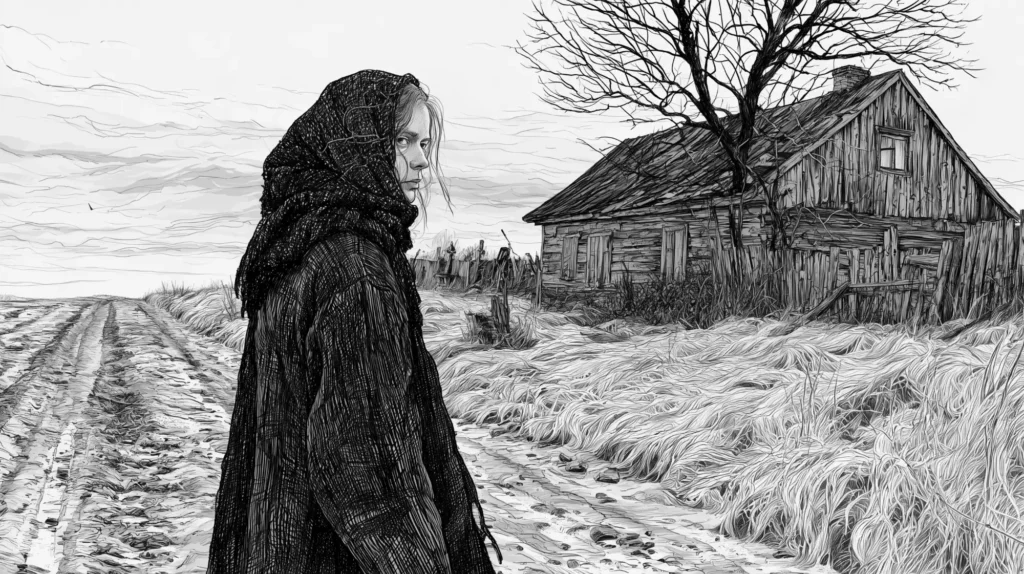
In The Forgotten Region, a woman walks through a landscape of abandoned houses, overgrown fields and neglected graves. A warm kitchen, a familiar face, a childhood refuge: each seems real enough to hold on to, until past and present begin to slip out of place. In The Wooden Tulip, a bedridden woman writes letters to her mother, full of longing, anger and very sharp observation. The room around her seems to come apart, and a voice on the radio becomes the nearest thing she has to company.
These are not comfortable stories, and Wojasiński does not soften them. What he does instead is pay attention, closely and without pity, until the people in them become impossible to overlook. When the Polish original, Zapomniane, appeared, the magazine Magazyn Literacki KSIĄŻKI made it its Book of the Month and wrote that it “hypnotises readers, leaving a lasting and distinct mark on their souls”.
Charles S. Kraszewski translated the book and wrote its introduction. It runs to 212 pages and is available in hardback, paperback and as an ebook.
Olanda: the Poland you see from a train window
Olanda was Wojasiński’s first book in English, published by Glagoslav in 2020. Its narrator wanders the roads and woods near his home, past dilapidated farmhouses, sagging apartment blocks and overgrown cemeteries, the kind of world most people see only through a train window on the way to somewhere more important. He is not unhappy there. “I don’t know what life is, Ola,” he says, “but I’m holding on to it.”
The book is full of people: ageing beauties, gravedigger philosophers, defrocked seminarians, village drunks and the occasional politician. Not much happens in the usual sense. The Modern Novel wrote that there are some very good books about nothing much, that this is one of them, and that it “must surely become a classic of Polish literature”. Writing in The Polish Review, Jack J. B. Hutchens called the translation “a joy to read and a challenge to analyze”.
The English edition also includes the radio play Old Man Kalina.
Tefil: a man who collects the clothes of the dead
Tefil begins with a photograph. A young man named Rozmaryn, who lost both his parents as a child and never knew his mother, finds a picture of her with a stranger, and sets out to find him.
The search leads him to Tefil: balding, not very clean, never married, once the village odd-job man and now the occupant of a garret flat in a sleepy Polish town, where he collects the clothes of the dead. He cadges coffee and pastries from anyone who will stand still, goes to great lengths to avoid paying back small debts, and talks without stopping, most memorably in praise of mould, the one form of life he believes will outlast us all.
He is hard to like and harder to stop listening to, which is exactly Rozmaryn’s problem too. The critic Karol Skrzypek put it well: “Perhaps Rafał Wojasiński has written not so much a novel as a human being.” The English edition runs to 210 pages and appeared in 2024.
Which book should you read first?
- For a first meeting: The Forgotten. It is his newest book, the two narratives can be read separately, and it shows his gift for giving a voice to people who have lost their audience.
- For the landscape and its people: Olanda, the award-winning novel of a provincial world that is shabby, overlooked and full of life.
- For one character you will not forget: Tefil, a novel built around a single extraordinary voice.
The translator: Charles S. Kraszewski
All three books reached English through the same translator, which gives them one consistent voice. Charles S. Kraszewski is a poet and novelist in his own right, writing in English and Polish, and he translates from Polish, Czech and Slovak. For Glagoslav he has translated, among much else, Adam Mickiewicz’s Forefathers’ Eve and Tytus Czyżewski’s A Burglar of the Better Sort. In 2022 he received the Gloria Artis medal from the Polish Ministry of Culture, and in 2023 the ZAiKS award for translation into a foreign language.
More Polish literature from Glagoslav
If Wojasiński leaves you wanting more contemporary Polish writing, try Jan Polkowski’s Głosy / Voices or Andrzej Kotański’s Poems about my Psychiatrist, both translated by Kraszewski. For the older tradition behind them, there is Władysław Reymont, the Nobel laureate, whose The Vampire and The Revolt of the Animals are both on our list, and the new Six Plays of Witkacy, translated by Adam Czasak.